Reclaim Your Defining Facial Profile with Beard Transplants in Ludhiana
Eliminate patchy facial hair permanently with custom jawline architecture designed for thick, natural, and masculine density.
What is Beard Hair Transplant?
The Art of Masculine Facial Contouring
A beard hair transplant is a highly sophisticated facial hair restoration procedure designed to reverse patchiness, fill in sparse areas, or completely build a full, robust beard from scratch.
Whether your facial hair is naturally thin due to genetics, or you want to permanently camouflage facial scars caused by acne, burns, or past injuries, this treatment provides an undetectable solution.
The procedure harvests permanent, high-vitality hair follicles from the lower back of your scalp and strategically relocates them into your cheek lines, jaw, goatee, and sideburns. At Alvora Hair Clinic, we don’t just add hair density. We map the unique variations of your face, aligning the grafts with the natural change in hair direction across your chin and jawline so your beard grows with an authentic, perfectly groomed flow.


Defining Your Path to Full Density
Successful beard restoration relies on finding the right hair texture and healthy skin tissue. You are an ideal candidate if you experience:
Patchy or Sparse Growth
Genetically uneven facial hair coverage or weak cheek lines.
Trauma or Acne Scarring
Missing beard sections caused by past cuts, burns, or deep cystic acne scars.
Desire for Greater Definition
Looking to establish a sharper, thicker, and more prominent jawline frame.
Healthy Donor Reserves
Adequate, coarse hair follicles available at the back of the head to match facial hair texture.
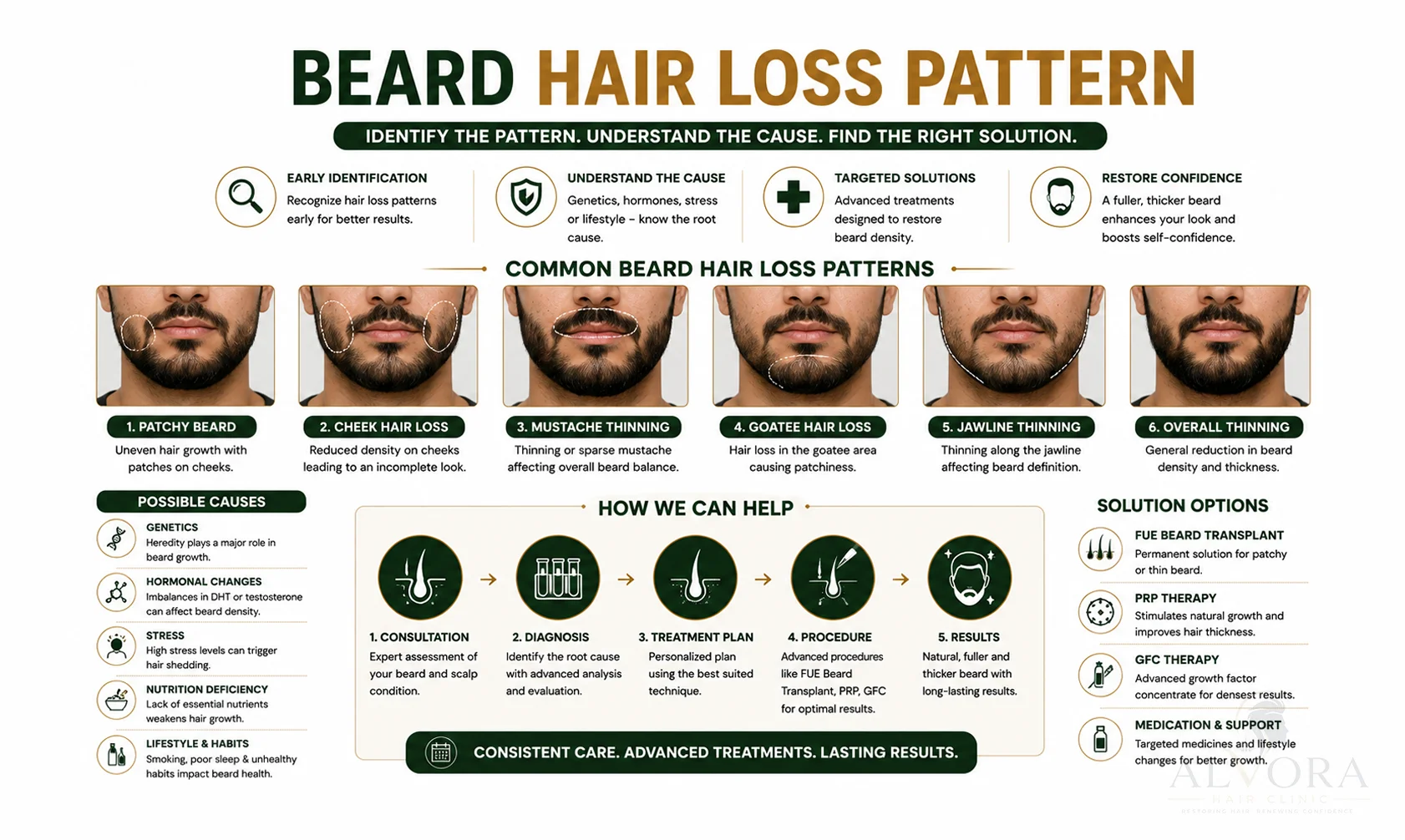
Identify the Pattern. Understand the Cause. Find the Right Solution.
Mapping Common Beard Hair Loss Patterns
Facial hair loss rarely follows a single rule—it manifests differently across the cheeks, chin, jaw, and upper lip. By identifying your specific pattern early, our clinical team can diagnose the underlying root cause and engineer a targeted FUE micro-grafting plan to permanently restore your facial frame.
Core Triggers & Restoration Solutions
Possible Causes of Beard Hair Loss
- Genetics: Hereditary traits playing a major role in overall facial hair coverage and density limiters.
- Hormonal Changes: Imbalances in DHT (Dihydrotestosterone) or testosterone sensitivity directly affecting facial hair growth.
- Stress Factors: High physical or emotional stress levels triggering localized facial shedding (such as Alopecia Barbae).
- Nutrition Deficiency: A lack of essential vitamins, minerals, and proteins weakening hair root health.
- Lifestyle & Habits: Smoking, poor sleep hygiene, and unhealthy daily habits impacting facial micro-circulation.
Targeted Solution Options
- FUE Beard Transplant: The ultimate permanent solution for patchy, thin, or absent facial hair.
- PRP Therapy: Autologous platelet treatment to stimulate natural growth and thicken weak facial shafts.
- GFC Therapy: Next-generation acellular growth factor concentrate for maximum density acceleration.
- Medication & Lifestyle Support: Targeted clinical support and habits guidance for long-term health.
High-Level Clinical Benchmarks
- Early Identification: Recognize facial hair loss patterns early to secure superior, high-density results.
- Understand the Cause: Diagnose whether genetics, hormones, stress, or lifestyle are driving the loss.
- Targeted Solutions: Deploy advanced, surgical and non-surgical treatments custom-built for facial hair.
- Restore Confidence: Reclaim a fuller, thicker beard that defines your jawline and boosts self-esteem.
Why Choose Our Precision Beard Restoration?
Flawless Profile Definition
Custom-drawn cheek and jaw contours designed to dramatically elevate your facial geometry.
Natural Flat-Laying Hairs
Grafts are placed at extremely acute, flat angles so the hair hugs the jawline naturally without spiking.
Permanent Styling Freedom
The moved roots are permanent, meaning you can shave, trim, groom, and grow your beard exactly like native hair.
Complete Acne Scar Camouflage
Easily places thick hair directly through textured scar tissue to fully hide past skin damage.
Our Advanced Procedural Approach
Micro-FUE Follicle Matching
The ultimate standard in facial hair relocation, isolating individual follicle units that best match the thickness and texture of real beard hair.
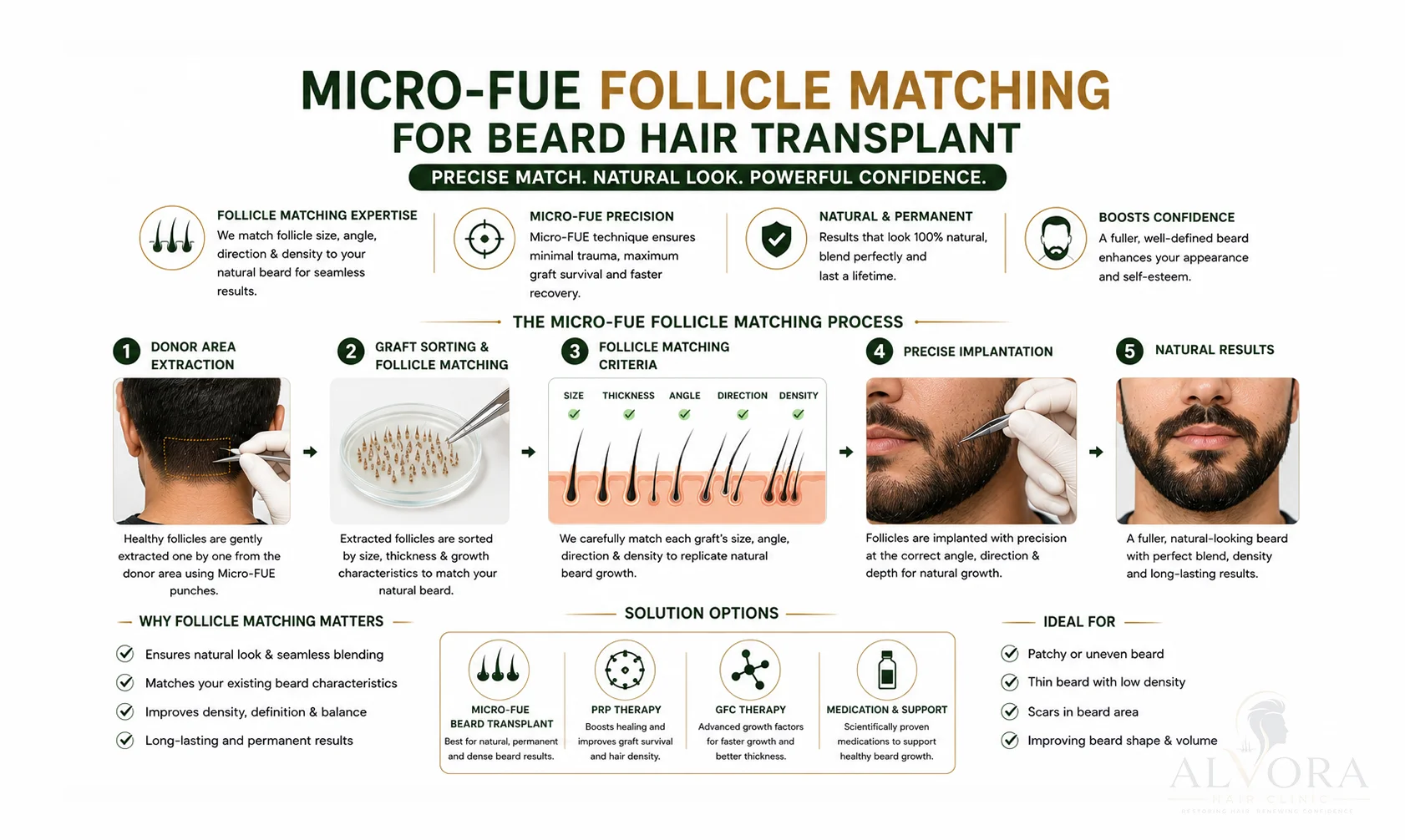
- Uses ultra-fine micro-punches to guarantee zero visible linear scarring.
- Selects specific single and double hair roots to ensure clean, natural groupings.
- Leaves the scalp donor zone entirely hidden under your regular hair layers.
- Allows for absolute placement control across the cheeks, chin, and neck blend.
Quick Hair Transplant (QHT) Care
An ultra-refined handling protocol designed to keep fragile facial grafts hydrated, chilled, and highly viable during transition.
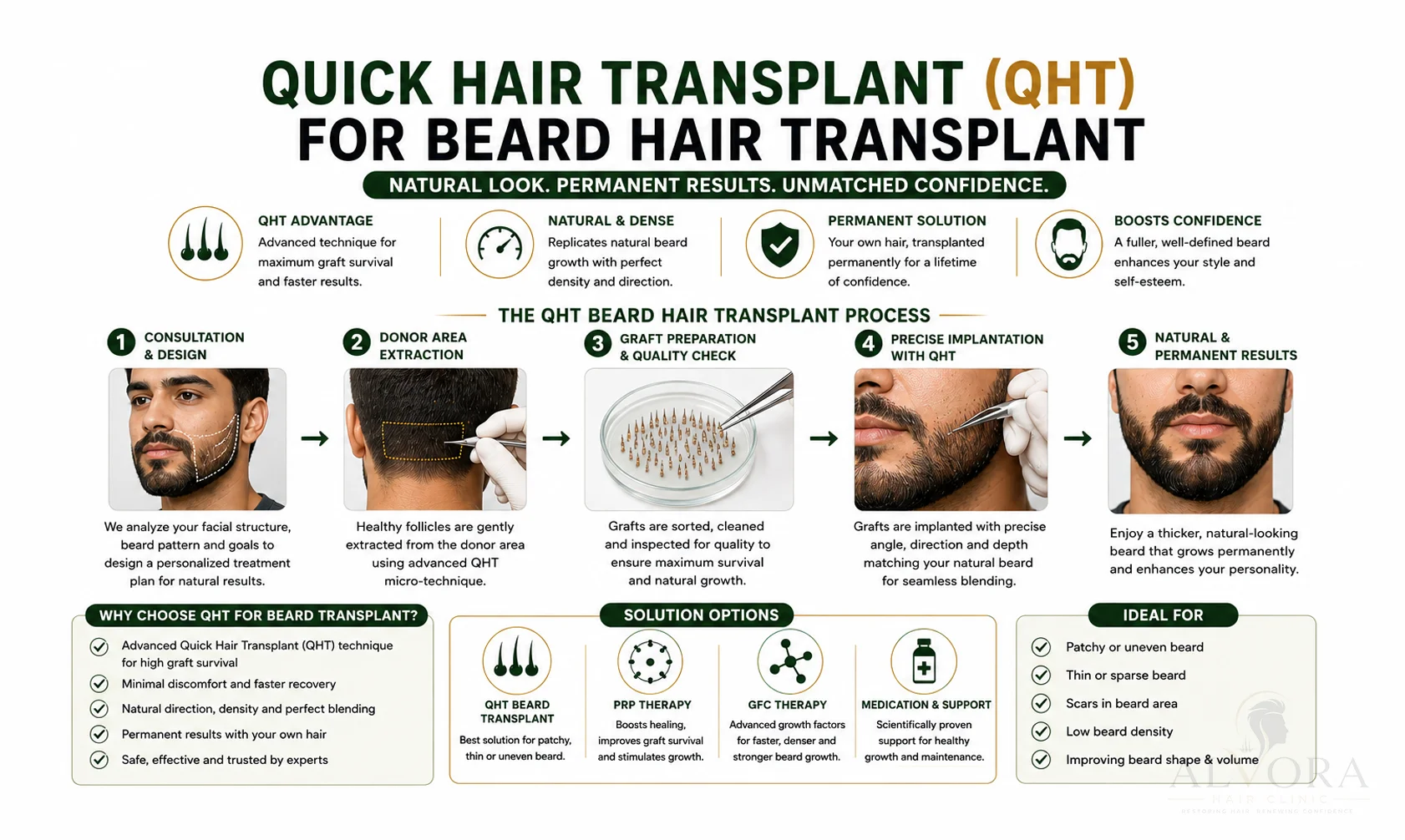
- Drastically reduces the time delicate follicles spend outside the scalp.
- Protects harvested grafts from mechanical handling stress.
- Ensures a exceptionally fast, clean, and comfortable post-op skin recovery.
- Maximizes the survival and smooth maturation of thin hair roots.
Step-by-Step Excellence: Designing Your Profile
The Beard Restoration Journey
Step 01Custom Jawline Mapping
We sit down with you to hand-draw a symmetrical, face-complementing beard blueprint that fits your bone structure.
Step 02Localized Comfort
Advanced, localized numbing agents are carefully applied to ensure you remain completely relaxed and pain-free.
Step 03Coarse Hair Extraction
Our surgical team isolates the healthiest, most robust hair follicles from the lower back of your head.
Step 04Microscopic Verification
Every graft is cleaned under high-magnification loops to isolate perfect units free of excess tissue.
Step 05Acute-Angle Implantation
Follicles are planted one by one at strict 15^∘ angles, matching the natural multidirectional flow of jawline hair.
Preparing for Your Procedure Day
Avoid Blood Thinners
Stop taking aspirin, ibuprofen, and specific vitamin supplements for 7 days prior to protect healing.
Pause Alcohol and Smoking
Refrain from nicotine and alcohol for at least 72 hours before surgery to ensure optimal skin blood flow.
Keep Your Face Clean
Arrive on the morning of surgery with a clean face; do not apply any shaving lotions, creams, or oils to the jaw area.
Wear Button-Down Clothing
Wear a loose, button-up or zipped shirt so you do not have to pull clothing over your face after the procedure.
Results / Transformation Gallery
High-Definition Beard Transformations
Witness the power of structural facial contouring. Explore our untouched before-and-after photo portfolios showing real beard restorations.
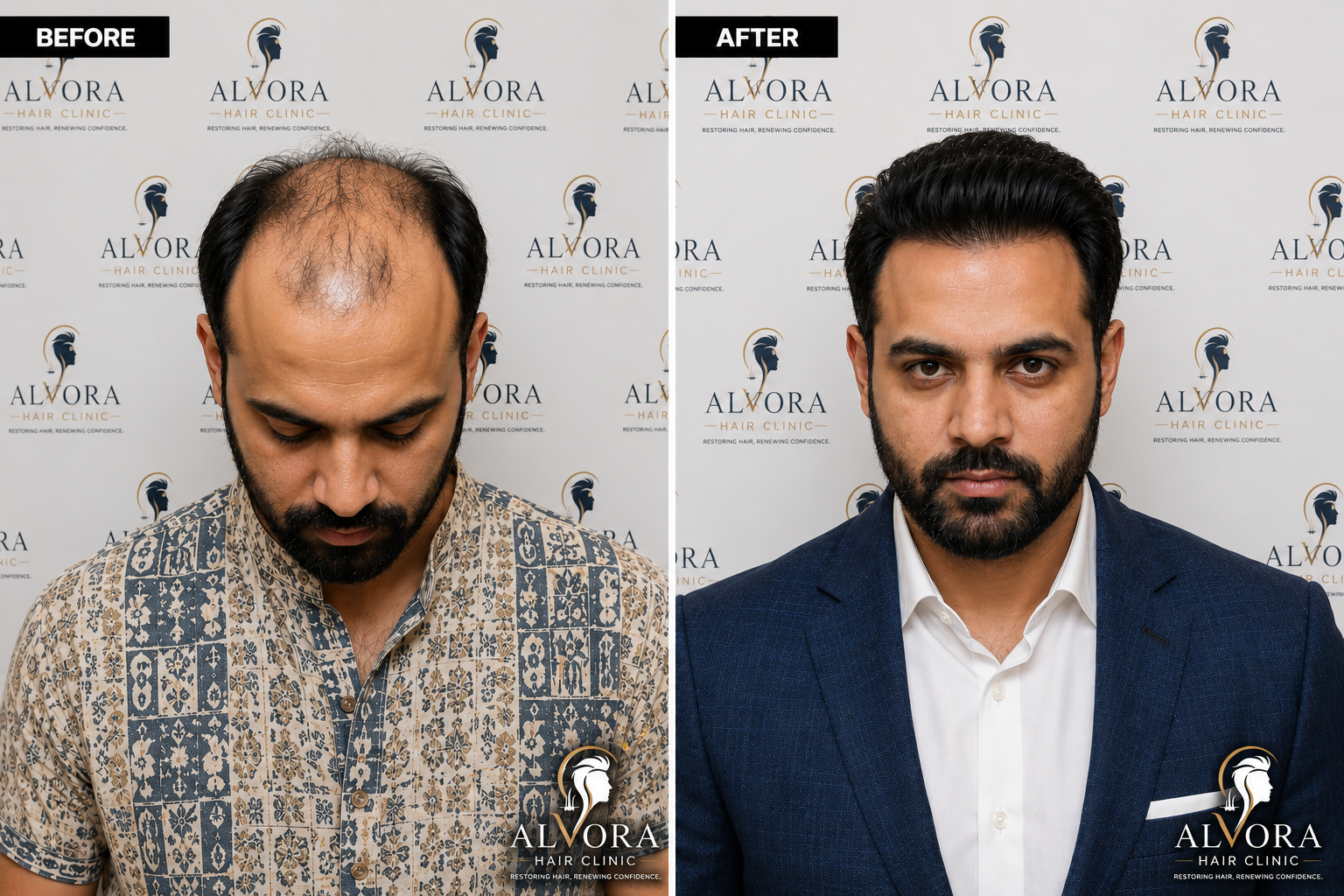
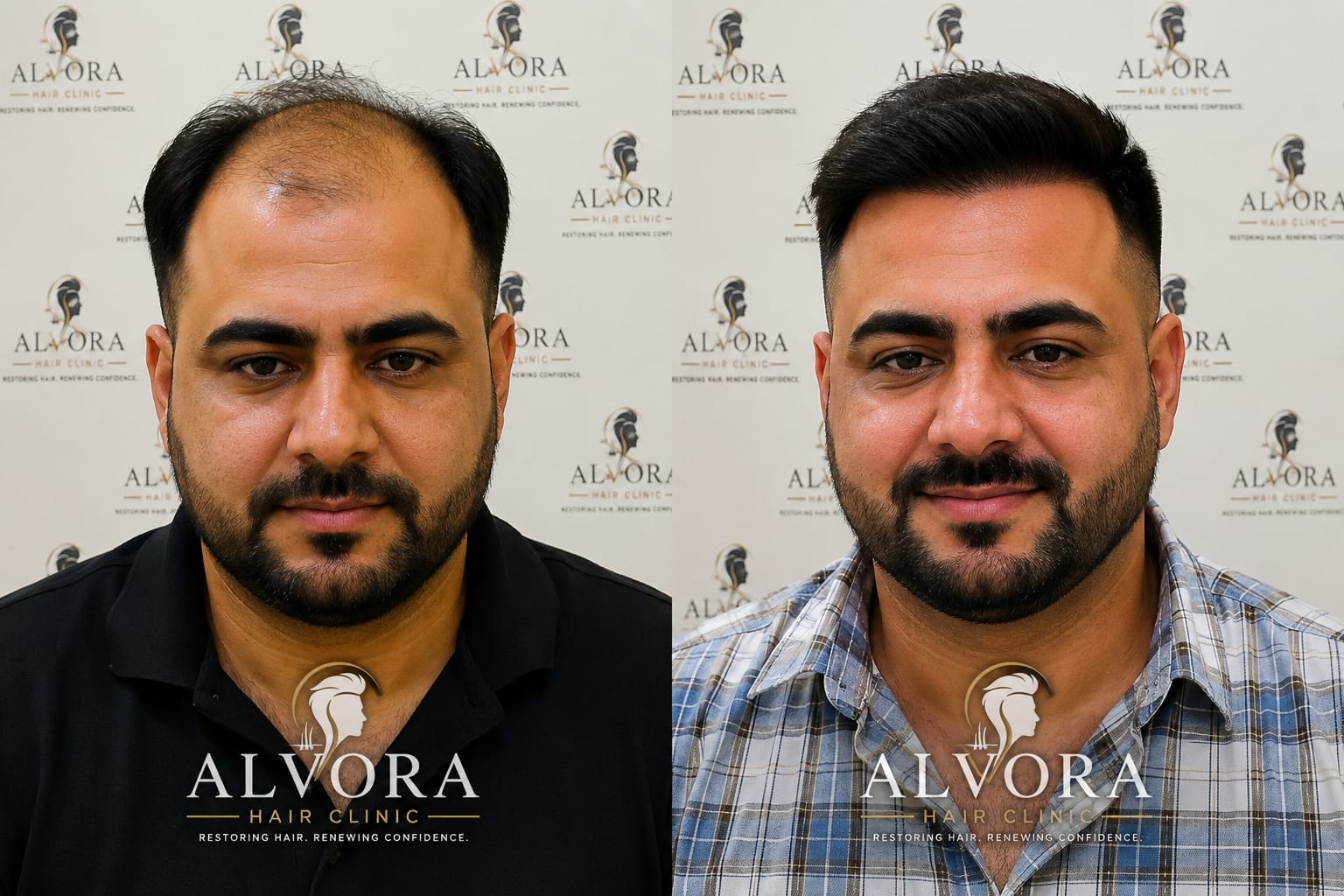
Will the transplanted beard hair look and feel different from my native facial hair
Initially, the transplanted hair will retain the exact texture of your scalp donor hair. However, once integrated into the facial skin, the follicles undergo “recipient co-adaptation.” Over the course of a year, the increased facial blood flow changes the hair’s characteristics, causing it to become coarser, thicker, and blend seamlessly with your native facial hair.
How many grafts are usually required for a beard transplant?
The graft count depends entirely on your current facial hair patchiness. Filling in minor cheek patches or defining thin sideburns typically takes 1,000 to 1,500 grafts. Building a full, heavy, dense Hollywood-style beard from scratch can require 2,500 to 3,500+ individual grafts.
Is a beard hair transplant permanent?
Yes, absolutely. Just like a traditional hair transplant in Ludhiana, the hair roots are harvested from permanent, life-long donor zones at the back of the head. Once these follicles heal and take root in the facial area, they are permanent and will grow naturally for the rest of your life.
Will the results look completely natural, or will the hair stick straight out?
It looks entirely natural when performed by an expert surgeon. Spiking hair only occurs if a clinic implants the root at a steep 45^∘ or 90^∘ angle. At Alvora Hair Clinic, our team implants the follicles at an ultra-sharp downward angle of 10^∘ to 20^∘ parallel to the skin, mimicking nature perfectly so the hair lays completely flat.
What is the recovery downtime like for the face?
The physical downtime is minimal. You may experience mild swelling, redness, or slight tightness around the jaw and cheeks for the first 3 to 5 days. Tiny, pinpoint crusts will form around each graft and naturally flake away within 7 to 10 days, leaving the skin smooth and healed.
When can I start shaving or trimming my new beard?
You must let the grafts fully anchor without any disturbance for the first 14 days. After two weeks, you can safely trim the hair with a small pair of scissors or a gentle trimmer. You should avoid using a clean razor blade directly on the transplanted cheek or jaw zones for at least 4 to 6 weeks to protect the skin matrix.
Can a beard transplant safely cover up deep acne scars?
Yes, absolutely. Reversing facial scarring is a primary benefit of this procedure. While scar tissue has less blood flow than healthy skin, our specialized micro-FUE and QHT techniques allow us to safely place grafts into the scar matrix. The new hair completely covers the underlying scar tissue, making it invisible.
When will the final, full density be visible?
The transplanted facial hairs will shed within the first 3 to 4 weeks post-procedure—this is a normal, healthy resetting of the growth cycle. New, permanent beard hair starts growing around month 3. You will see a major improvement in coverage by month 6, with full, rich, high-density results maturing between 10 to 12 months.