Masterful Curly & Textured Hair Transplants in Ludhiana
Protect your natural curl pattern with specialized micro-FUE techniques designed explicitly for curved hair roots.
What is a Curly Hair Transplant?
The Specialized Science of Restoring Textured Hair
A curly hair transplant is one of the most specialized procedures in modern hair restoration.
Unlike straight hair, where the root grows vertically under the scalp, textured and curly hair strands form a helical, curved root structure beneath the skin’s surface. Using standard straight extraction tools on curly hair can lead to high graft damage (transection).
At Alvora Hair Clinic, we deploy customized, curved micro-punch equipment specifically calibrated for textured hair matrixes. Our elite surgical team maps the sub-surface curvature of your roots to harvest healthy, undamaged follicles. By respecting your natural curl pattern during implantation, we deliver rich, high-density coverage that blends seamlessly with your remaining native hair.


Is a Curly Hair Transplant Right for You?
Textured hair requires careful donor evaluation. You are an ideal candidate if you experience:
Textured or Curly Hair Loss
Receding hairlines, crown thinning, or diffuse loss in wavy, curly, or coily hair types.
Traction Alopecia
Hairline recession caused by tight braiding, twists, or heavy dreadlocks over time.
Stable Donor Reserves
Healthy donor density at the back or sides of the head to supply curved grafts.
Desire for Natural Curl Preservation
Patients looking to maintain their authentic hair texture without alteration.
Natural Curls. Natural Look. Permanent Results.
Mapping Your Curly Hair Loss & Restoration Pattern
Restoring curly and textured hair requires an intimate understanding of sub-surface root curvature and directional curl flow. Whether you are dealing with hairline recession, crown thinning, or traction loss, our specialized extraction and placement protocols ensure maximum graft survival while preserving your natural curl pattern and maximum visual volume.
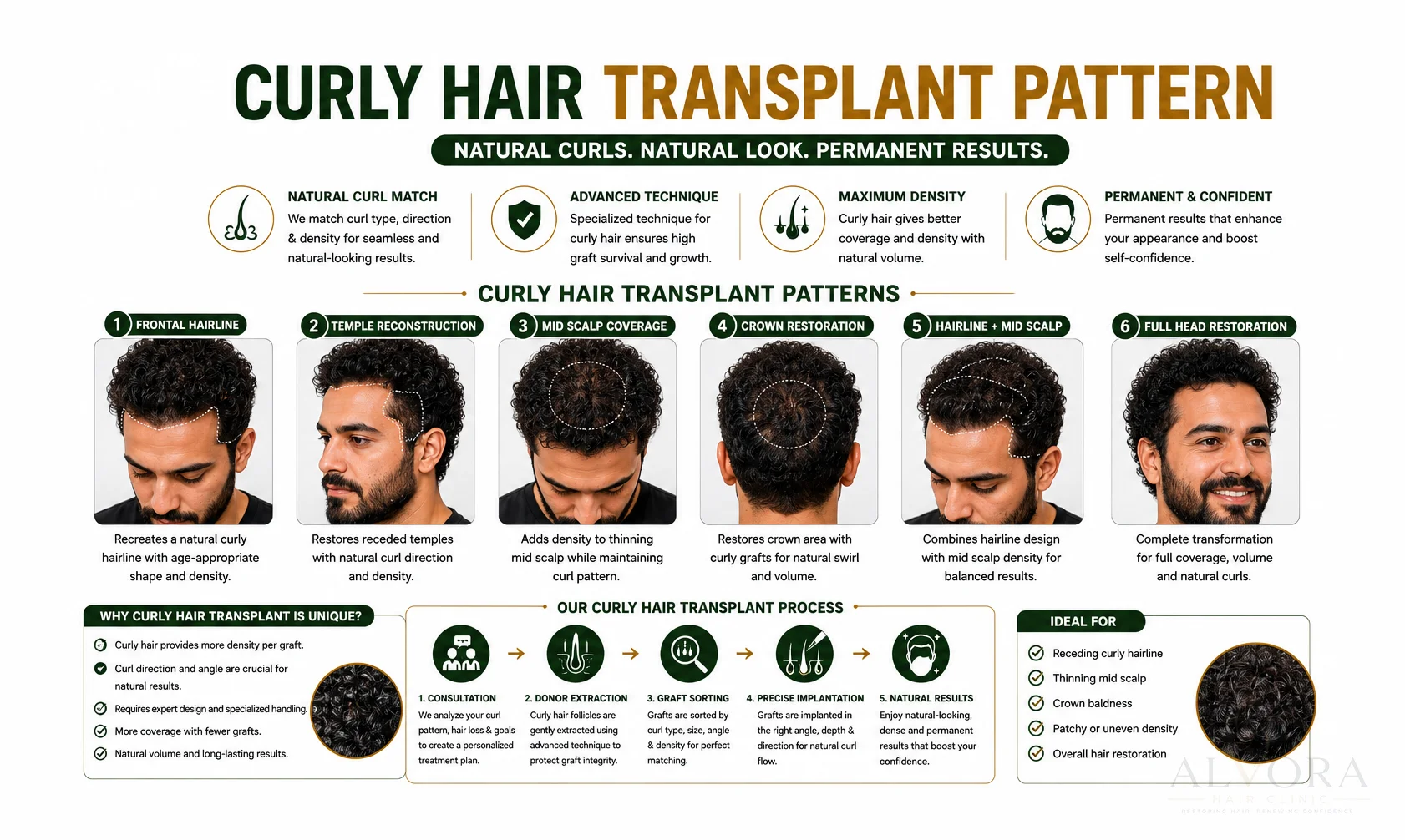
Core Triggers & Restoration Solutions
What Makes Curly Hair Transplants Unique & Why Curls Thin?
- Helical Root Geometry: Curly hair curves beneath the skin, making standard straight-punch extractions risky without specialized curved tools.
- Traction Alopecia & Styling Stress: Chronic tension from tight braids, dreadlocks, or chemical straighteners damaging delicate follicle matrices.
- Hereditary Thinning (Androgenetic Alopecia): Genetic sensitivity to DHT causing progressive thinning across temples, parts, and crowns.
- Angle & Direction Criticality: Curly grafts must be planted at precise angles to match the natural curl swirl and prevent unnatural hair angles.
Target Areas We Restore (Ideal For)
- Receding curly hairlines and temple recession
- Thinning mid-scalp and wide part lines
- Crown baldness and crown swirl restoration
- Patchy, uneven curl density or traction alopecia loss
- Full head hair restoration
Clinical Solutions That Work
- Curved Micro-FUE Extraction: Specialized oscillating curved punches designed to gently harvest helical roots without shear or damage.
- Custom Curl Matching: Sorting grafts by curl type, size, and sub-surface angle for a flawless, natural blend.
- Non-Surgical Preservation: GFC and PRP therapies to nourish weak native roots and accelerate new graft activation.
Core Clinical Benchmarks
- Natural Curl Match: Perfect curl type, direction, and density matching for a seamless appearance.
- High Survival Rate: Specialized curved extraction techniques ensure maximum graft survival and growth.
- Better Density: Curved shafts cover more surface area, yielding greater natural volume with fewer total grafts.
- Long-Lasting Results: Permanent, DHT-resistant results that last a lifetime with proper care.
- Expert Care: Performed exclusively by surgical specialists experienced in textured and curly hair.
Why Choose Our Specialized Curly Hair Restoration?
Superior Visual Volume
Curly hair provides greater natural scalp coverage, meaning fewer total grafts are often needed for a fuller appearance.
Zero Root Damage
Specialized curved tools prevent transection, preserving maximum follicle vitality.
Authentic Pattern Blending
Implantation angles are precisely calculated to follow your scalp’s natural curl rotation.
Lifelong Permanence
Relocated from permanent donor zones, your transplanted curls grow, age, and style naturally for life.
Types of Curly Hair Transplant
Micro-FUE for Curved Roots
The ultimate standard in textured hair relocation, utilizing specialized blunt and oscillating curved punches to safely navigate helical roots.
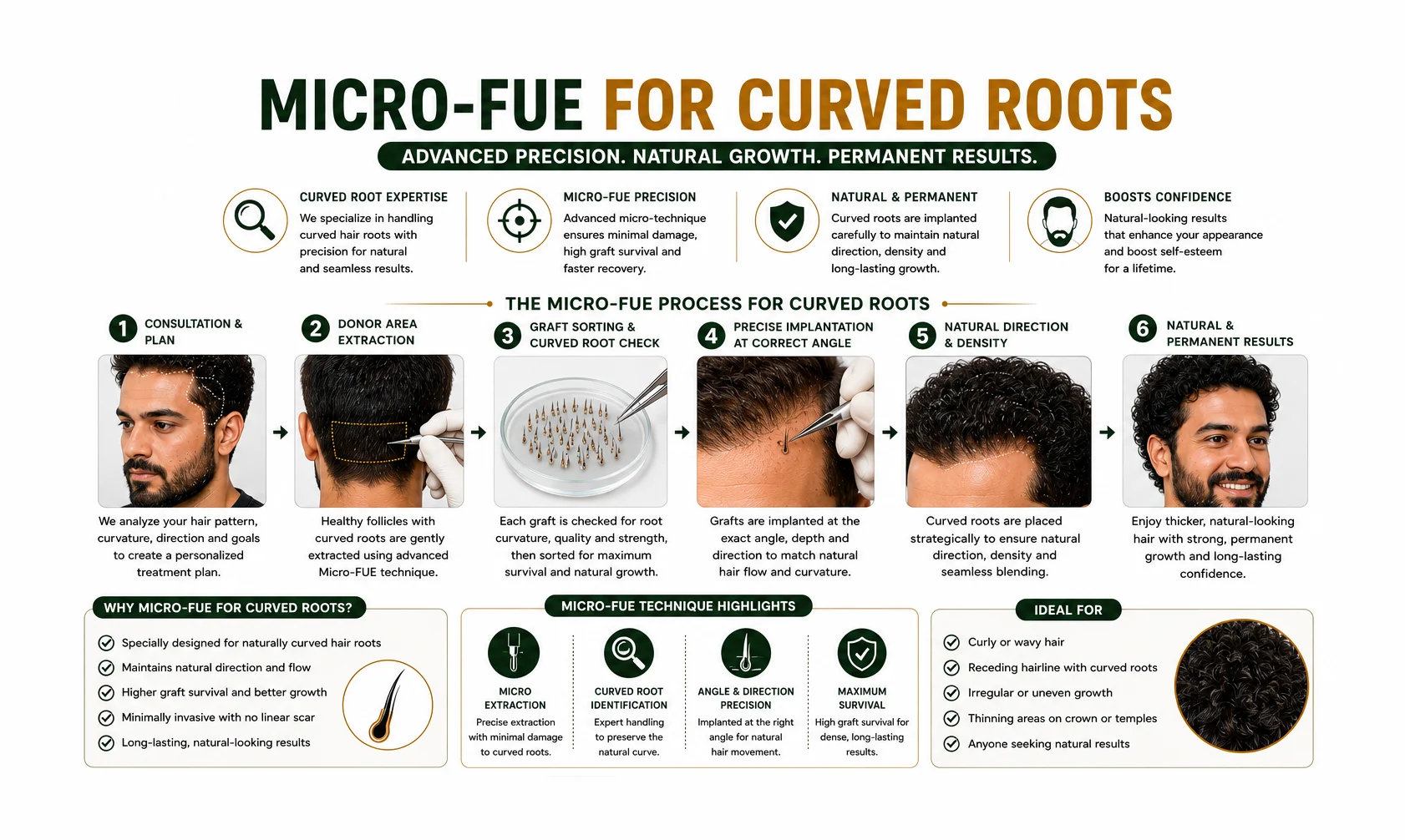
- Uses specialized punch diameters calibrated for sub-surface curl loops.
- Prevents mechanical shear and root slicing during extraction.
- Leaves the donor area completely clean with no linear scarring.
- Allows precise placement control across temples and crown swirls.
Quick Hair Transplant (QHT) Vitality Care
An ultra-refined handling protocol designed to keep fragile curly root structures hydrated and highly viable during transition.
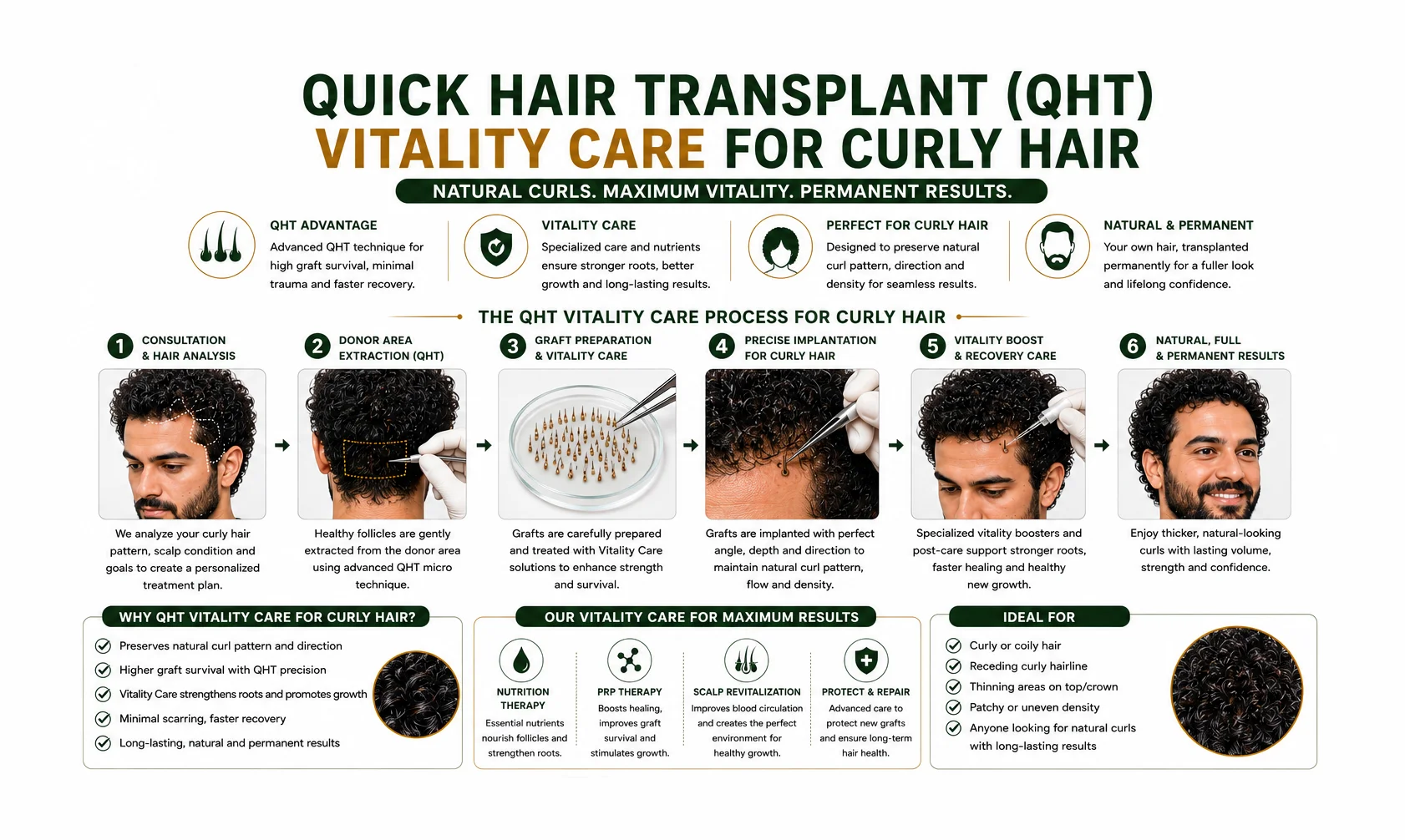
- Drastically reduces out-of-body transition time for extracted grafts.
- Protects delicate multi-hair curl units from handling stress.
- Promotes an exceptionally clean, fast, and comfortable skin recovery window.
- Maximizes the graft survival rate for textured hair roots
Step-by-Step Excellence: Restoring Your Curls
The Curly Hair Treatment Journey
Step 01Curl Pattern Analysis
We evaluate your hair’s curl radius, tightness, and sub-surface angle under magnification.
Step 02Localized Comfort
Advanced localized numbing agents ensure you stay completely relaxed and pain-free throughout the day.
Step 03Curved Micro-Extraction
Specialized oscillating punches gently navigate around the root curve to harvest intact units.
Step 04Microscopic Sorting
Grafts are cleaned and classified under high-magnification optics to preserve their natural grouping.
Step 05Directional Implantation
Follicles are placed at custom angles that match the natural spiral and direction of your native curls.
Preparing for Your Procedure Day
Keep Your Hair Natural
Avoid chemical straighteners, relaxers, or tight braids for at least 2 weeks prior to surgery.
Pause Blood Thinners
Stop taking aspirin, ibuprofen, and specific vitamin supplements 7 days before the procedure.
Gentle Morning Wash
Wash your hair with a mild shampoo on the morning of surgery, leaving it free from heavy oils or gels.
Wear Button-Down Clothing
Wear a loose, button-up shirt so you do not have to pull clothing over your fresh grafts post-surgery.
Results / Transformation Gallery
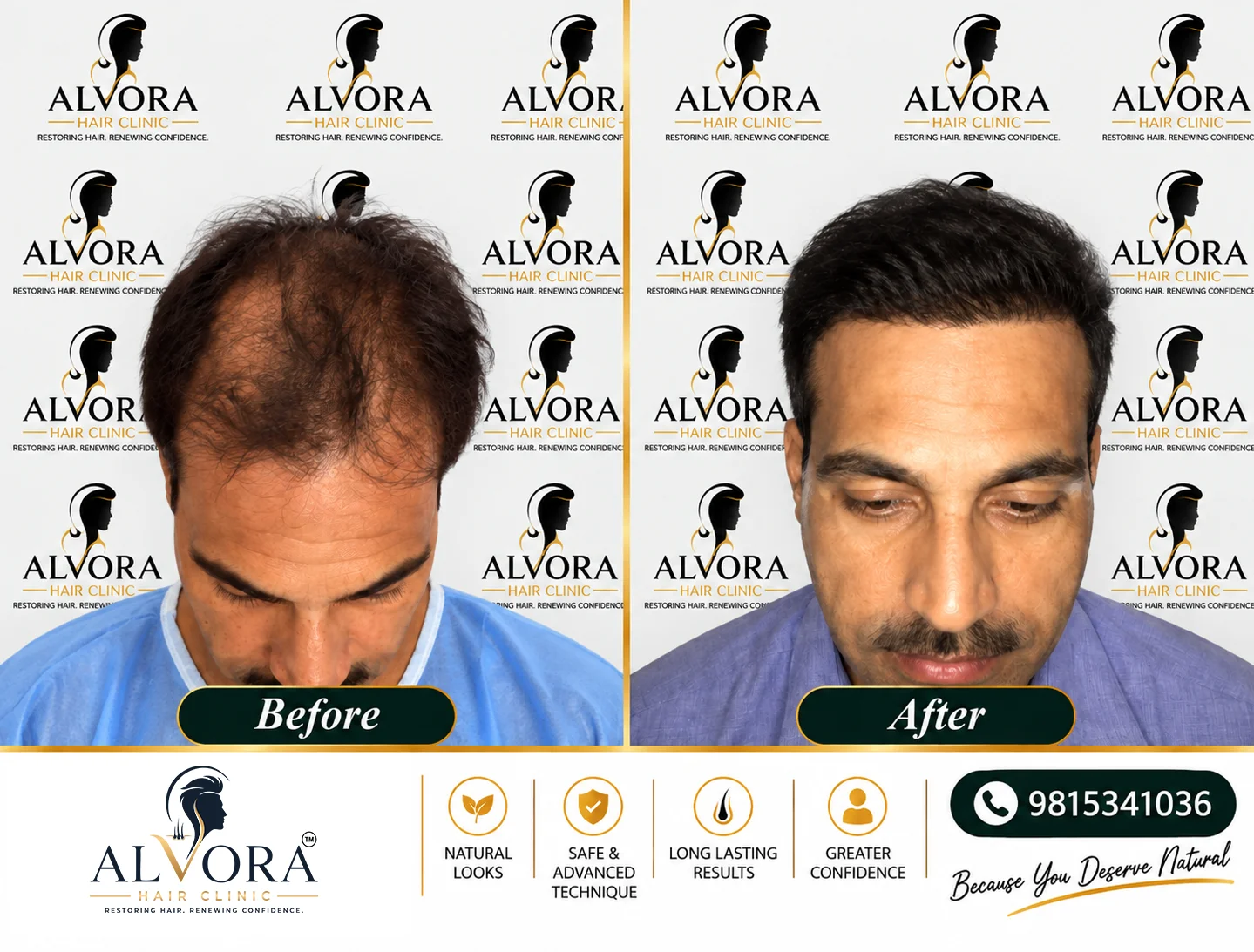
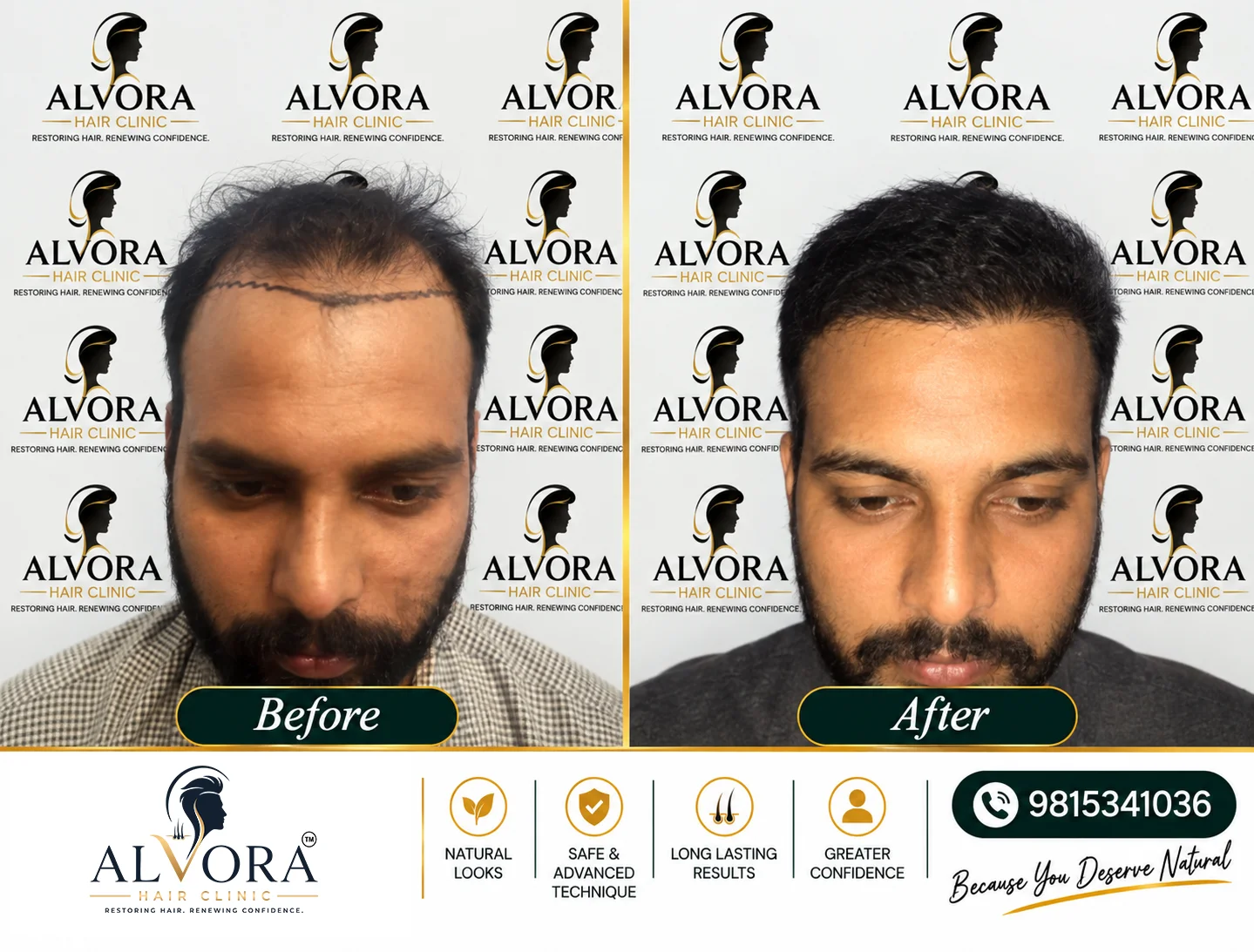
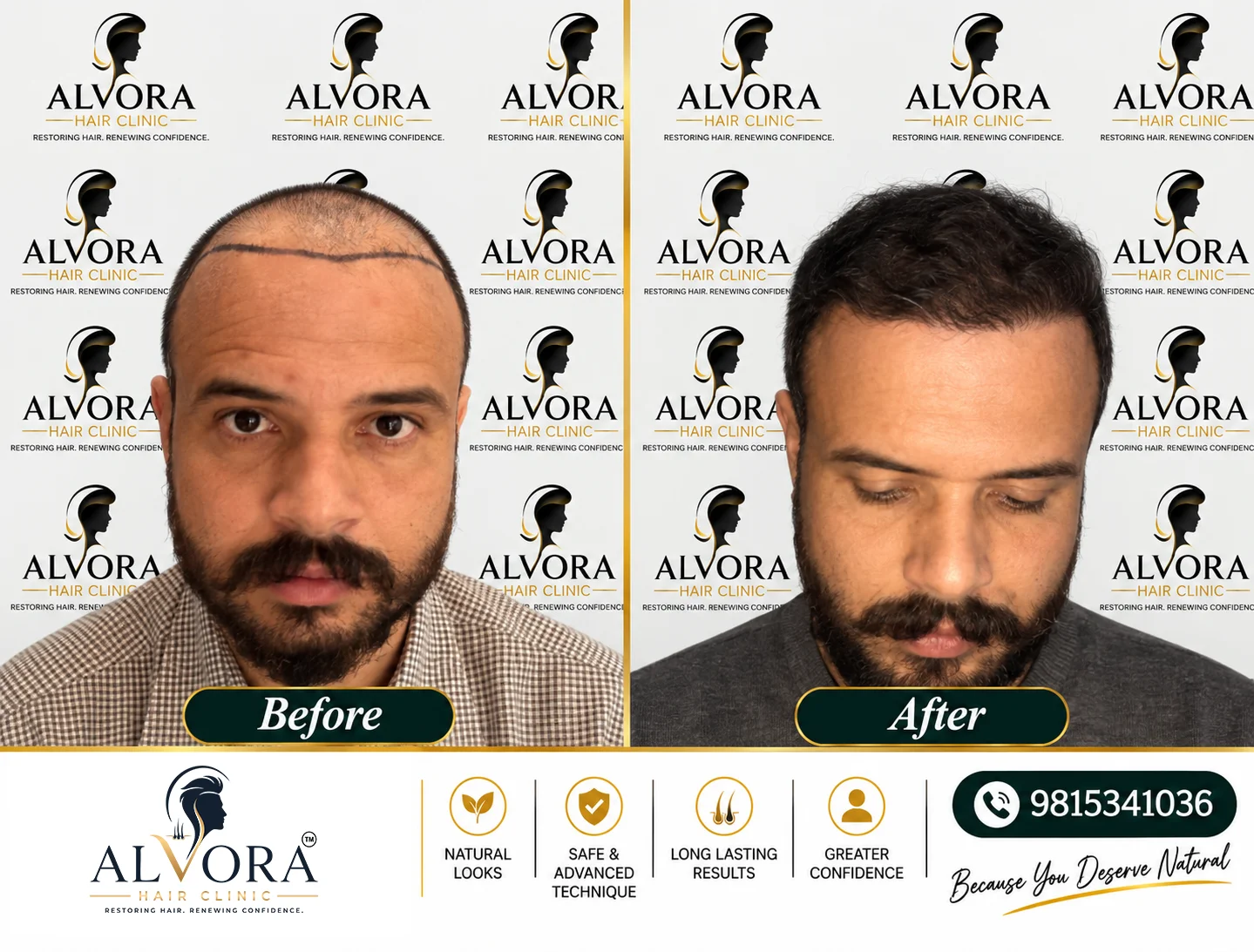
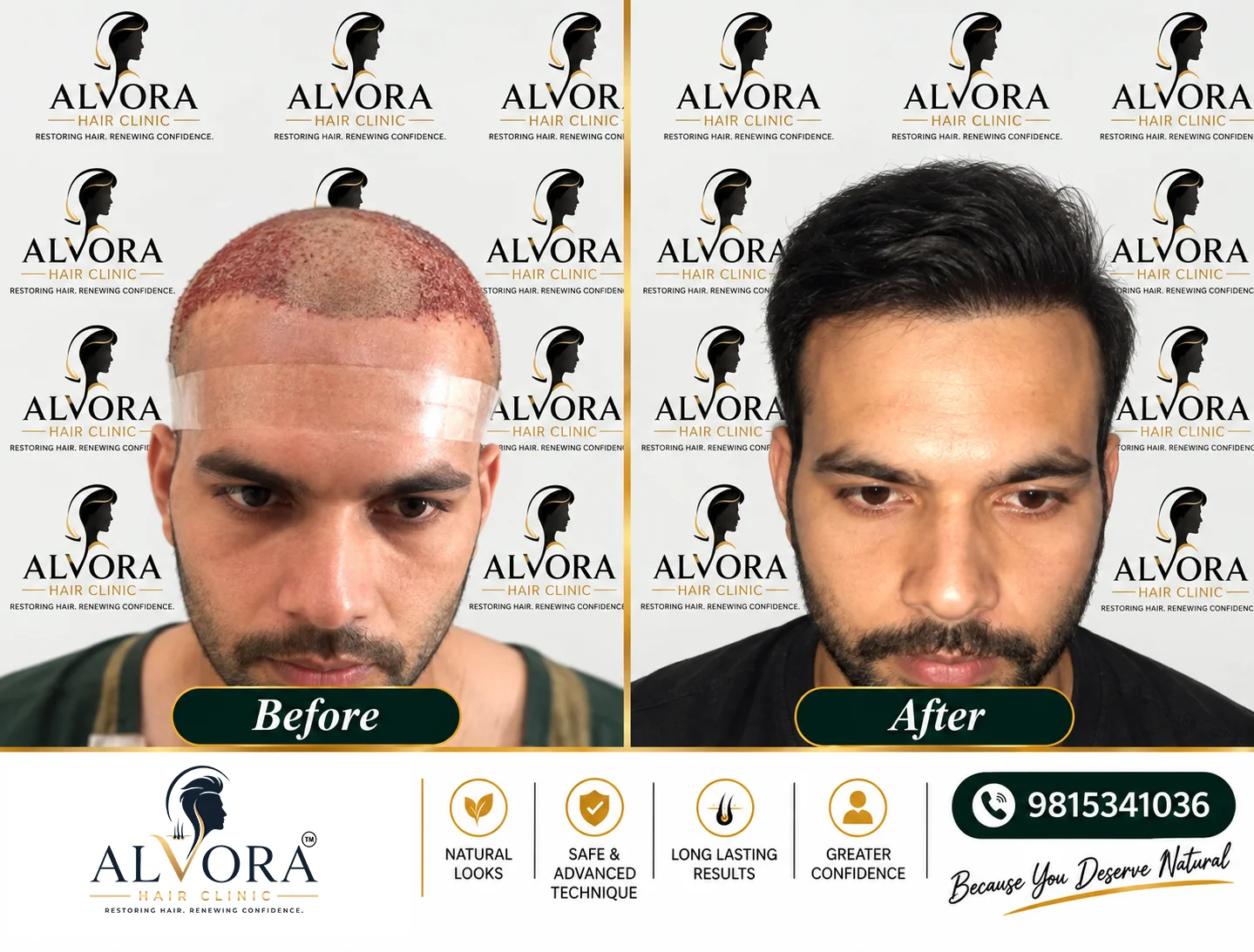
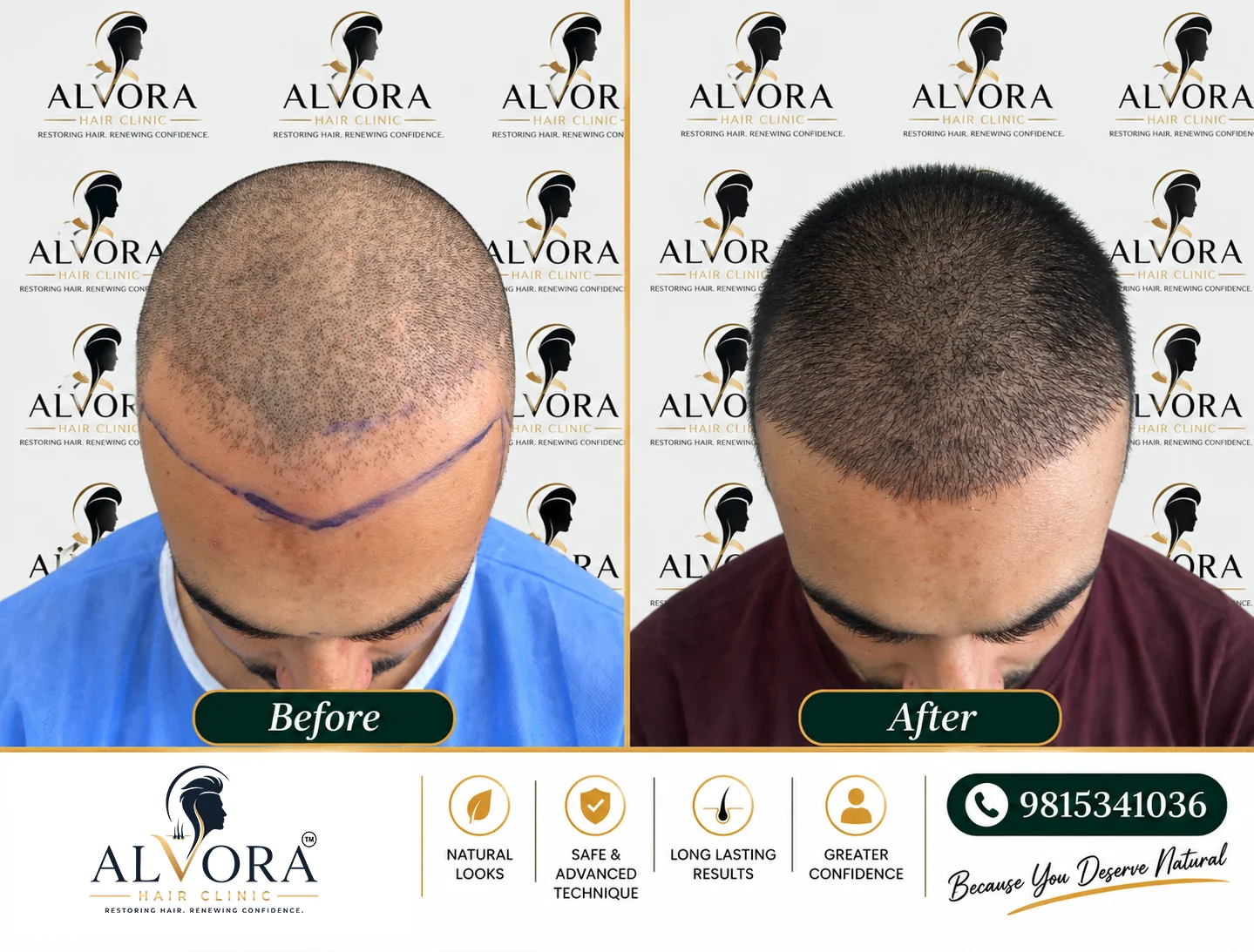
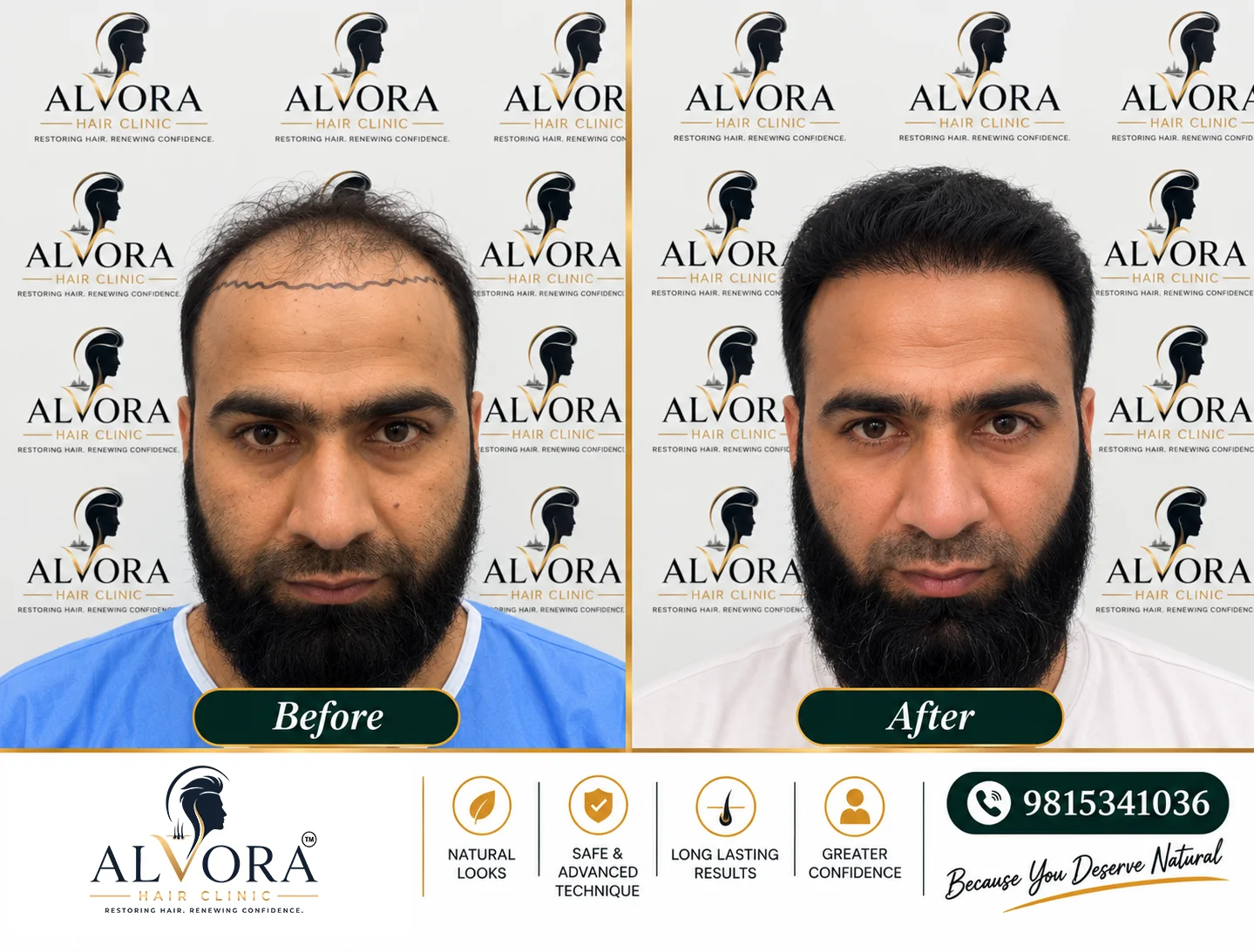
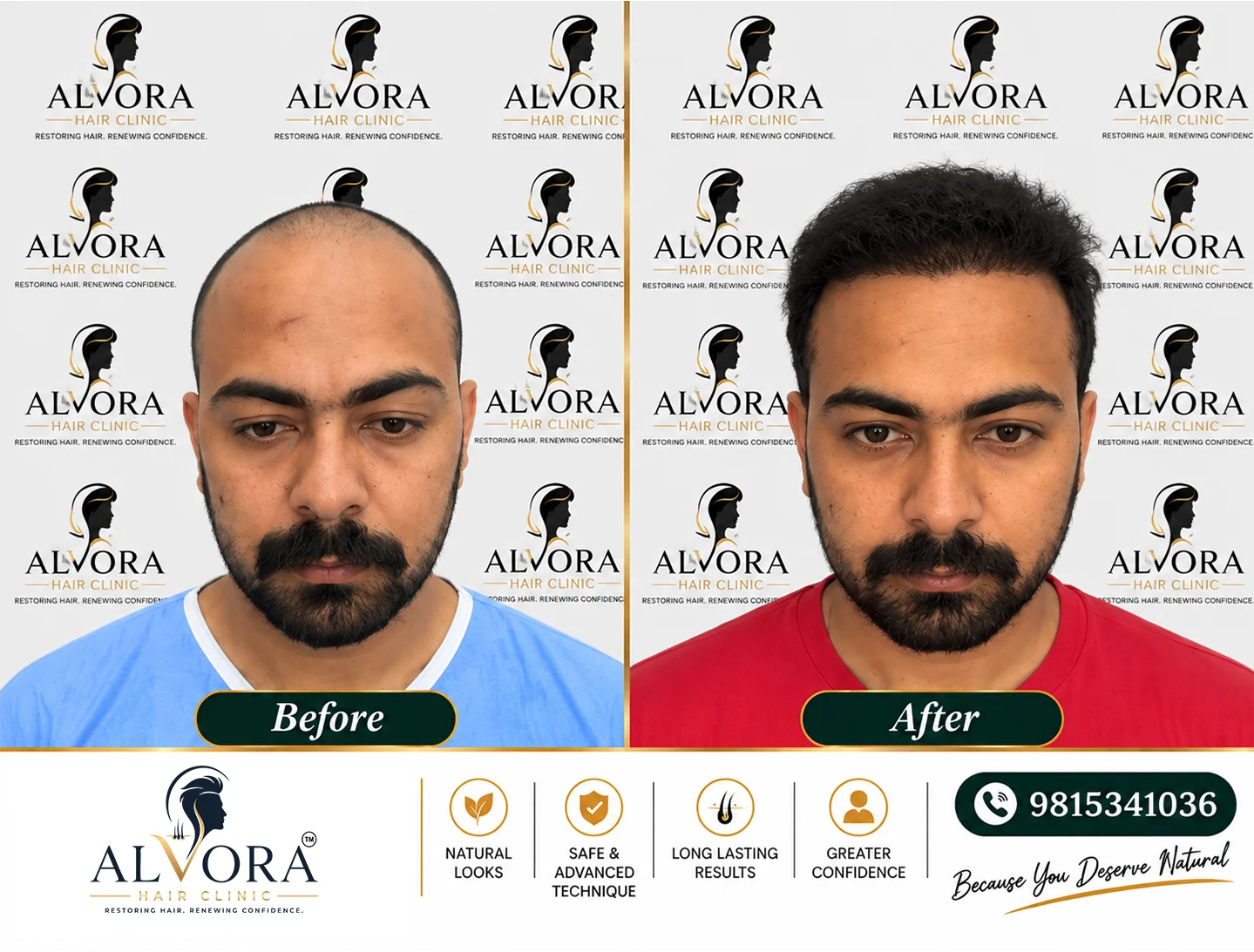
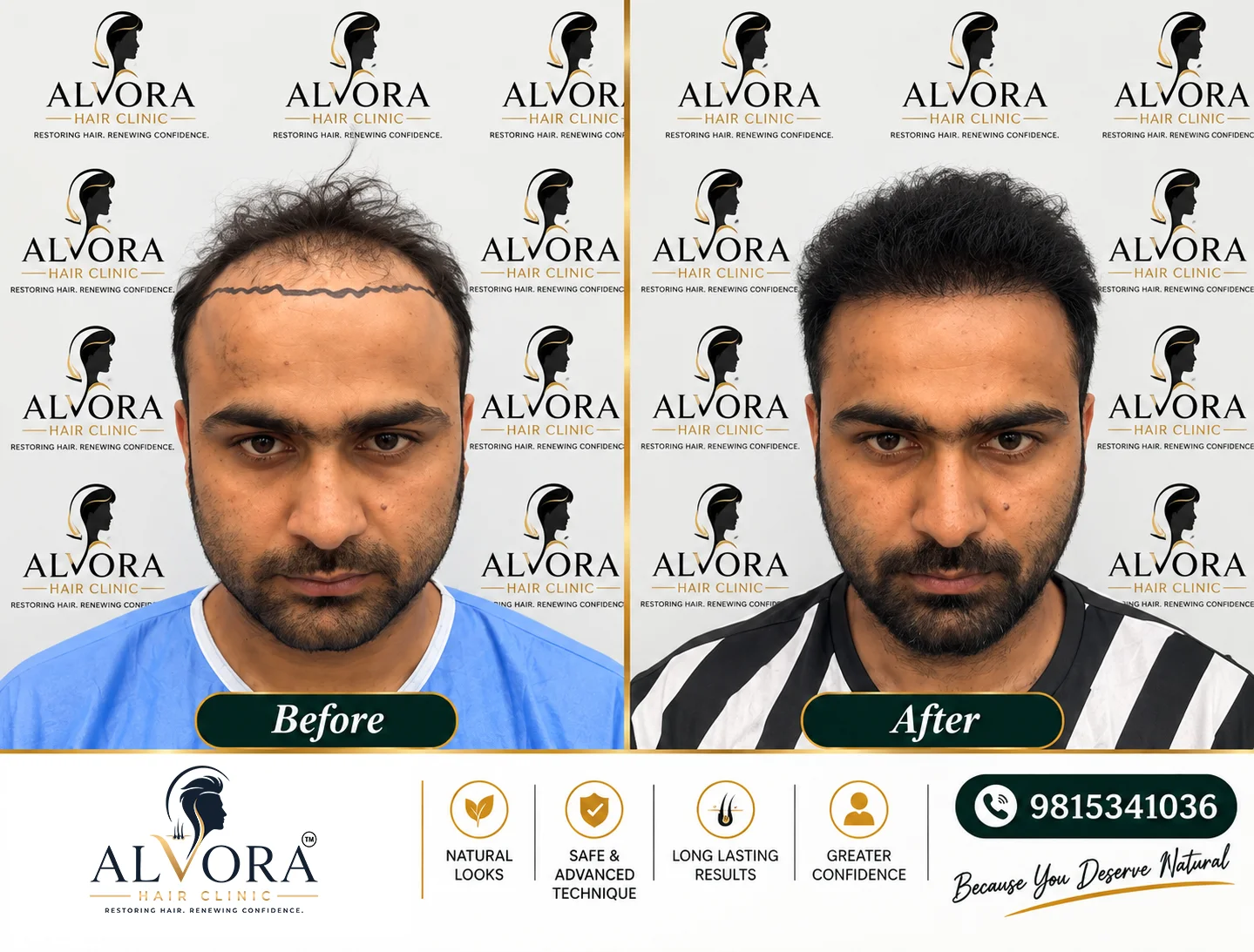
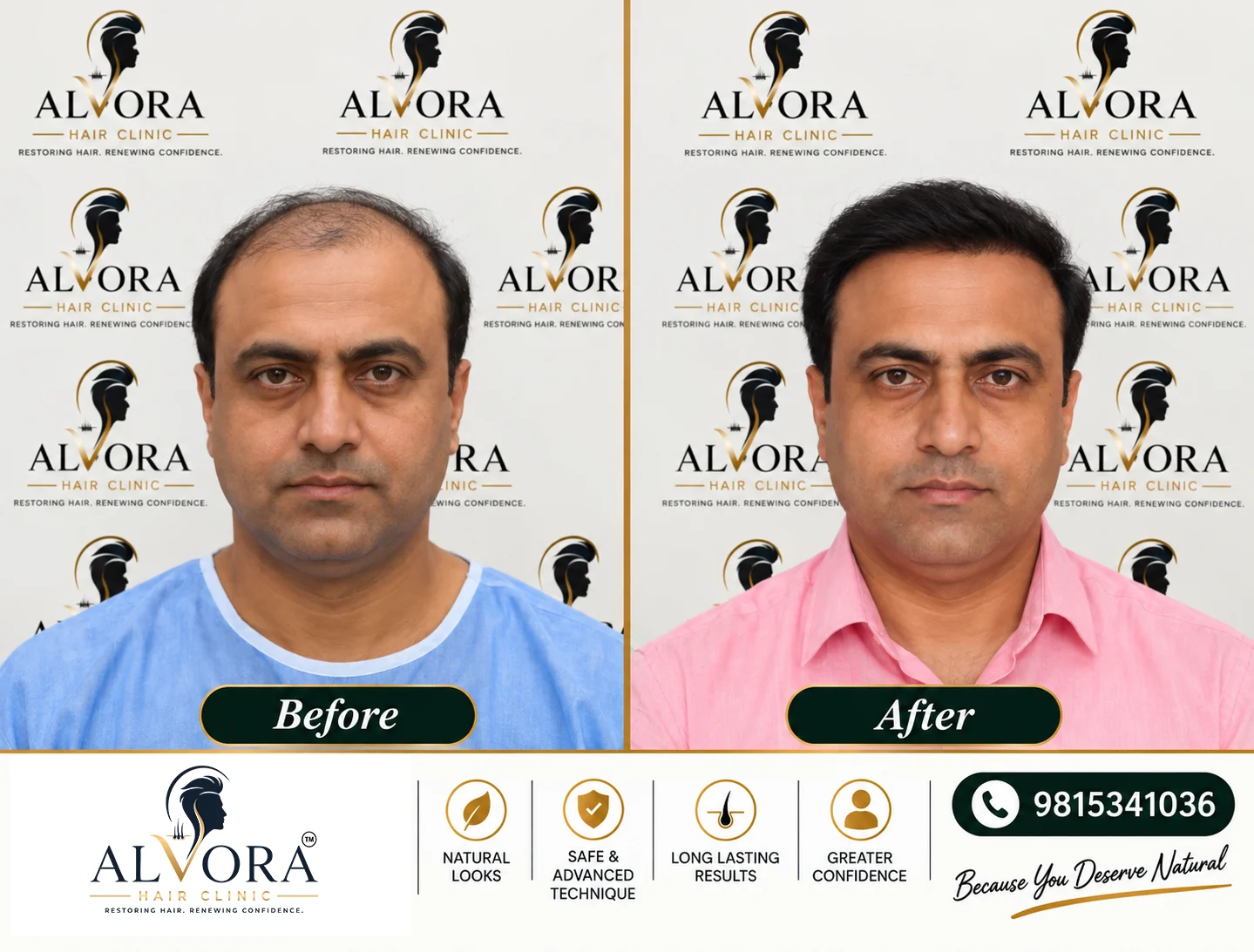
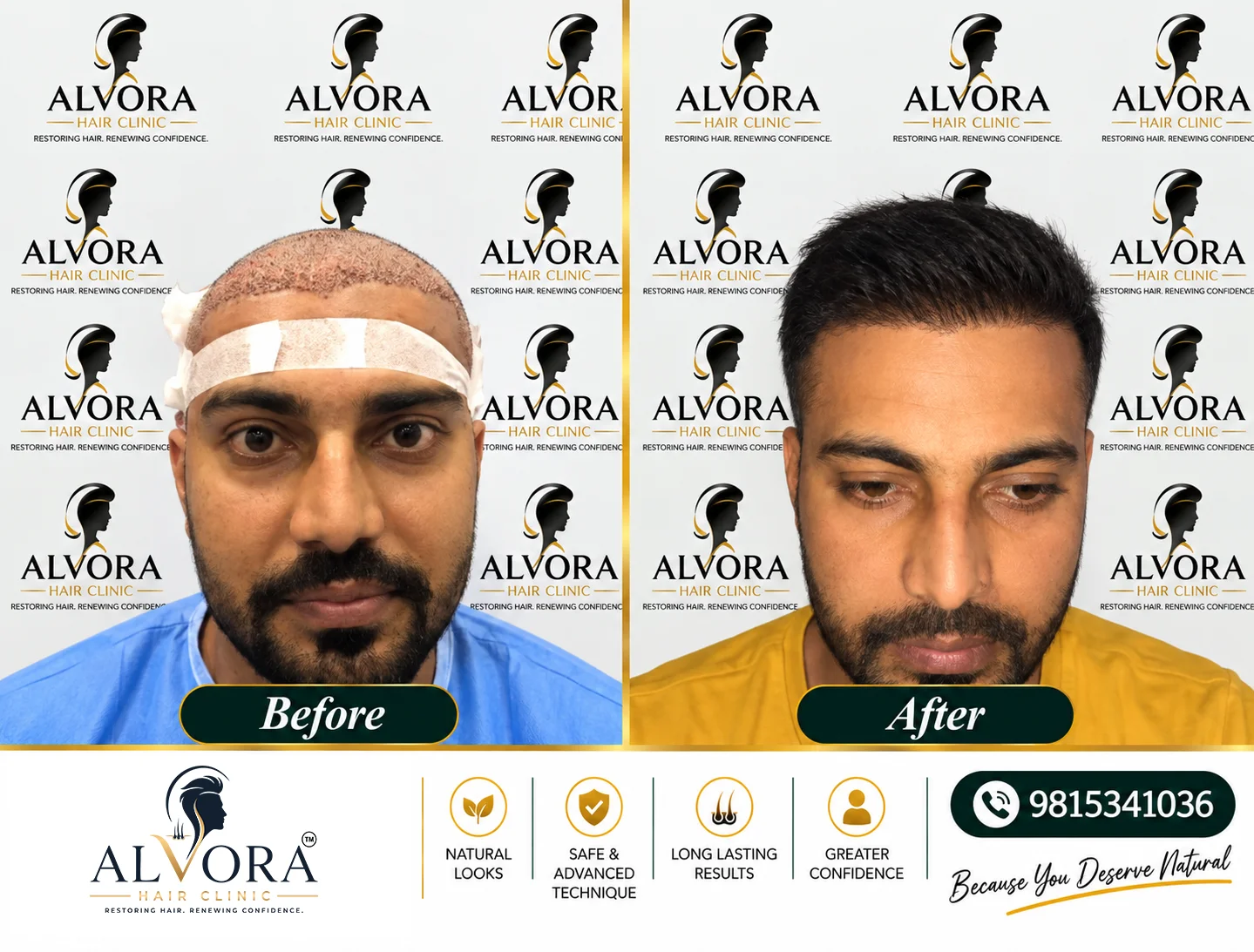
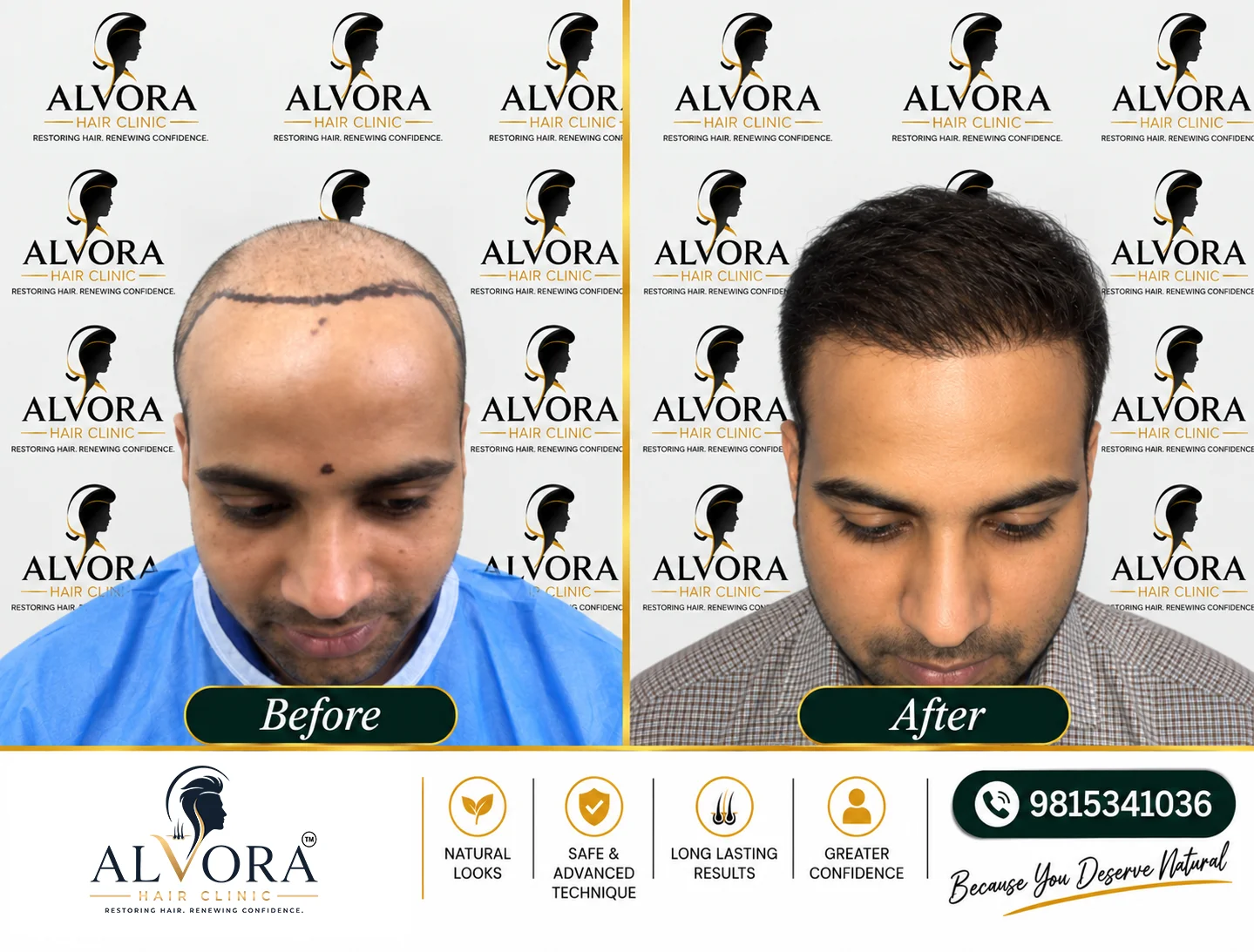
Verified Curly Hair Transformations
Explore our photo and video portfolios demonstrating real, high-density curly hair restorations and hairline rebuilds.
Is a curly hair transplant harder to perform than a straight hair transplant?
Yes. Curly hair roots curve beneath the scalp, making them trickier to extract without slicing the root. Standard straight punches often cause high graft damage on curly hair. At Alvora Hair Clinic, we use specialized curved punches and custom angle techniques to extract the roots safely without harm.
Will my transplanted hair maintain its natural curl texture?
o Yes, absolutely. The genetic memory and physical structure of your hair follicle remain completely unchanged during relocation. Your new hair will grow out with the exact same natural curl pattern, texture, and wave as the rest of your hair.
Does curly hair require fewer grafts for full coverage?
In many cases, yes. Because curly and textured hair strands curve and lift away from the scalp, they create greater visual volume and density than straight hair strands. This means a curly hair transplant often provides superior scalp coverage with fewer total grafts.
How many grafts are typically needed for a curly hair transplant?
Graft counts depend on your hair loss stage. Receding temple restoration usually requires 1,500 to 2,000 grafts, while larger crown or mid-scalp thinning may require 2,500 to 3,500+ grafts. A personalized digital scalp analysis will give you an exact count.
Can a transplant repair hair loss caused by tight braids or dreadlocks (Traction Alopecia)?
Yes. Traction alopecia is very common among individuals with textured hair. Micro-FUE hair transplantation is an ideal solution to permanently restore damaged edges, temples, and hairlines caused by chronic pulling.
What is the recovery time after a curly hair transplant?
Physical recovery is quick. Most patients return to desk jobs within 3 to 5 days. Tiny pinpoint crusts around the grafts naturally flake off within 7 to 10 days. We provide simple post-op guidelines to keep your scalp hydrated and clean.
Can I wear braids, dreadlocks, or protective styles after my transplant?
Once your transplanted hair fully matures (around 12 months), you can style it freely. However, we strongly advise against overly tight braiding or heavy extensions in the future to protect both your native and transplanted roots from traction damage.
When will I see the full results of my curly hair transplant?
Transplanted shafts shed within 3 to 4 weeks post-procedure—a completely normal part of the cycle. Fresh curly hair begins emerging around month 3, visible density builds by month 6, and full, high-density results mature between 9 to 12 months.